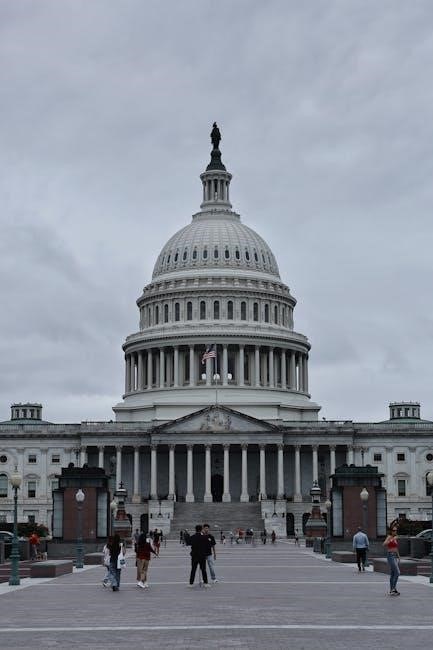
Our democracy’s foundational principles are explored within this textbook, detailing the U․S․ government structure and its evolution, offering a comprehensive guide for students․
What is a US Government Textbook?
A US Government textbook, such as “Our Democracy,” serves as a foundational resource for understanding the complexities of the American political system․ These texts meticulously detail the structure of the federal government, from the legislative, executive, and judicial branches, to the intricate relationships between states and the nation․ They delve into the historical context of the Constitution, exploring its origins, amendments, and ongoing interpretations․
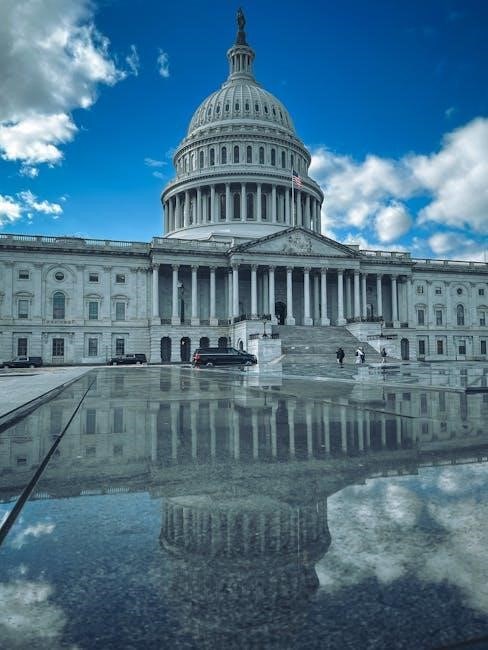
These textbooks aren’t merely descriptive; they aim to foster civic engagement․ They explain the rights and responsibilities of citizens, the importance of voting, and the roles of political parties and interest groups․ Furthermore, they often incorporate current events, prompting students to critically analyze contemporary issues facing the nation․ A quality textbook will also explore the evolution of American democracy, highlighting key milestones and challenges throughout history, ensuring a well-rounded understanding of the system․
Importance of Studying US Government
Studying US Government is paramount for informed citizenship in a democratic society․ Understanding the framework of our government – its institutions, processes, and principles – empowers individuals to actively participate in shaping public policy and holding leaders accountable․ A textbook like “Our Democracy” provides the necessary tools to analyze complex issues, evaluate information critically, and form reasoned opinions․
Knowledge of the Constitution and the Bill of Rights is crucial for protecting individual liberties and ensuring a just society․ Furthermore, comprehending the roles of different branches of government, political parties, and the media fosters a deeper appreciation for the checks and balances that safeguard against tyranny․ Ultimately, studying US Government isn’t just an academic exercise; it’s an investment in the future of American democracy, enabling citizens to contribute meaningfully to its ongoing evolution․
Target Audience for these Textbooks
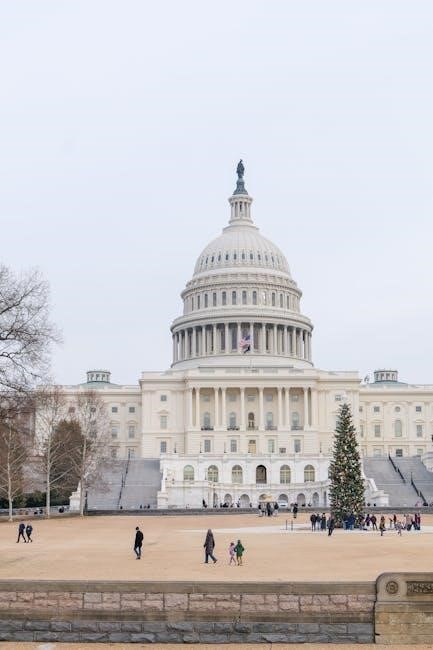
These US Government textbooks, such as “Our Democracy,” primarily target high school students enrolled in civics, government, or social studies courses․ The content is designed to meet the requirements of these academic programs, providing a foundational understanding of American political systems and principles․ However, the audience extends beyond the classroom․
College students taking introductory political science courses also benefit from these resources, utilizing them as a stepping stone for more advanced study․ Furthermore, engaged citizens seeking a comprehensive overview of how their government functions will find these textbooks valuable․ The accessible language and clear explanations make complex topics understandable for a broad readership, fostering informed participation in democratic processes․ Essentially, anyone interested in understanding the foundations and current state of US governance is a potential reader․
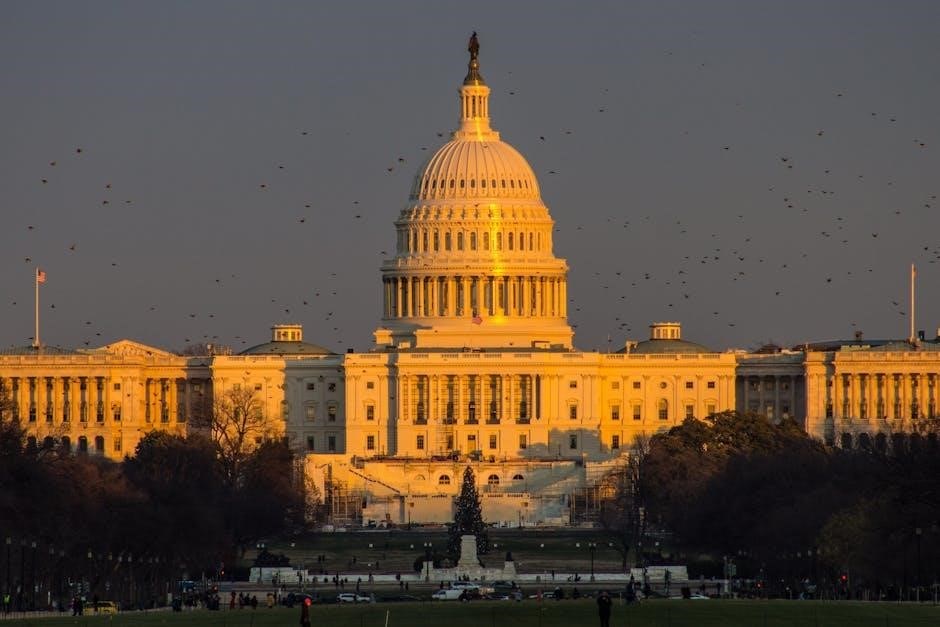
The Foundation of US Democracy
The Constitution, a free State’s bedrock, establishes principles like popular sovereignty and limited government, shaping the U․S․ government and individual liberties․
The Constitution: A Living Document
The United States Constitution isn’t a static relic of the past; it’s a remarkably adaptable “living document” continuously reinterpreted through amendments and judicial review․ Originally crafted in 1787, its enduring relevance stems from its capacity to address evolving societal norms and challenges․ This foundational text establishes the framework for the U․S․ government, outlining its structure, powers, and limitations․
Amendments, like the Bill of Rights, demonstrate this adaptability, responding to concerns about individual liberties․ Furthermore, the Supreme Court’s power of judicial review allows it to interpret the Constitution in light of contemporary issues, effectively updating its meaning without altering its core principles․ This dynamic interplay between text, amendment, and interpretation ensures the Constitution remains a vital guide for governance, safeguarding both stability and progress within our democracy․ It’s a testament to the foresight of the Founding Fathers and their commitment to a lasting, evolving system of government․
Principles of American Democracy
American democracy rests upon several core principles, ensuring a government accountable to its citizens․ Central among these is the concept of a written constitution, providing a clear framework for governance and protecting individual rights․ An independent judiciary, empowered to interpret this Constitution, is also crucial, safeguarding against governmental overreach and ensuring consistent application of the law․ These elements, foundational to the U․S․ government, promote stability and fairness․
Furthermore, the principles of popular sovereignty – the idea that political power resides in the people – and limited government – restricting governmental authority – are paramount․ These are interwoven with the separation of powers, dividing governmental functions among legislative, executive, and judicial branches to prevent tyranny․ These interconnected principles collectively define the American democratic ideal, fostering a system where citizens participate in their governance and are protected from arbitrary rule․
Popular Sovereignty
Popular sovereignty, a cornerstone of American democracy, asserts that the ultimate source of political power resides within the people themselves․ This principle dictates that the government’s legitimacy stems directly from the consent of the governed, meaning those in authority derive their right to rule from the populace․ Historically, this concept challenged the notion of divinely ordained monarchy, establishing a radical shift towards citizen participation․
Manifestations of popular sovereignty are evident in regular elections, where citizens choose their representatives, and in the ability of the people to amend the Constitution, directly shaping the fundamental laws of the land․ This empowers citizens to alter or abolish a government that fails to uphold their interests․ The very foundation of the U․S․ government rests on this belief in the people’s inherent right to self-governance, ensuring a responsive and accountable political system․
Limited Government
Limited government signifies that the powers of the government are not absolute; they are defined and restricted by a constitution and laws․ This principle prevents governmental overreach and safeguards individual liberties from undue interference․ The U․S․ Constitution meticulously outlines specific powers granted to the federal government, reserving all others to the states or the people – a clear demonstration of this limitation․
Checks and balances, alongside the separation of powers, further reinforce limited government, ensuring no single branch becomes too dominant․ An independent judiciary, empowered with judicial review, can invalidate actions exceeding constitutional boundaries․ This framework, deeply rooted in American political thought, aims to protect citizens from potential tyranny and uphold the rule of law, fostering a system where authority is always accountable and constrained by established principles․
Separation of Powers
The separation of powers is a fundamental principle of the U․S․ government, dividing governmental authority among three distinct branches: the legislative, executive, and judicial․ This division prevents any single branch from accumulating excessive power, safeguarding against potential authoritarianism․ Congress, the legislative branch, is responsible for creating laws․ The executive branch, headed by the President, enforces those laws․ Finally, the judicial branch, led by the Supreme Court, interprets the laws․
Each branch possesses unique powers and responsibilities, designed to operate independently yet interdependently․ This system isn’t about complete isolation, but rather a balance achieved through checks and balances․ The Constitution carefully delineates these powers, ensuring a dynamic tension that promotes accountability and prevents any one entity from dominating the others, thus protecting liberty and ensuring a balanced governmental structure․
The Bill of Rights: Protecting Individual Liberties
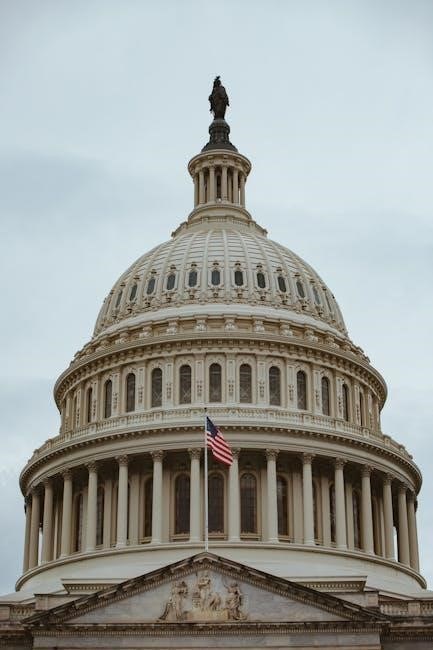
The Bill of Rights, comprising the first ten amendments to the U․S․ Constitution, enshrines fundamental rights and freedoms for all citizens․ Ratified in 1791, it addresses concerns raised during the Constitution’s initial adoption regarding potential governmental overreach․ These amendments safeguard essential liberties, including freedom of speech, religion, the press, the right to bear arms, protection against unreasonable searches and seizures, and the right to due process and a fair trial․
The Bill of Rights isn’t merely a historical document; it remains a living cornerstone of American democracy, continually interpreted and applied to contemporary issues․ It limits the power of the government, ensuring individual autonomy and protecting citizens from potential abuses․ Understanding these rights is crucial for active and informed civic participation, fostering a society where liberty and justice prevail․
Branches of the US Government
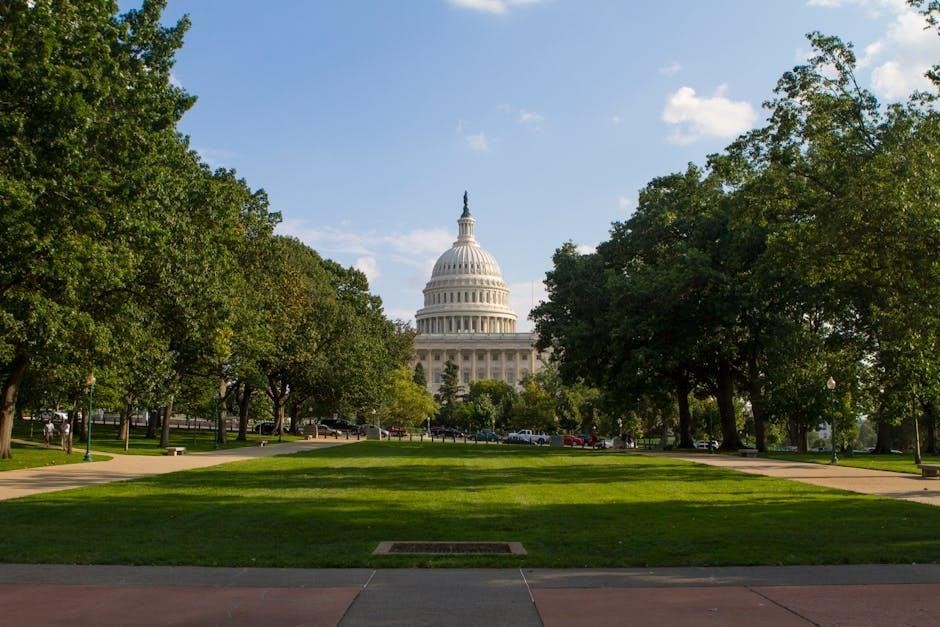
Government functions through three distinct branches – Legislative, Executive, and Judicial – each with specific powers, ensuring a balanced and effective system of governance․
The Legislative Branch: Congress
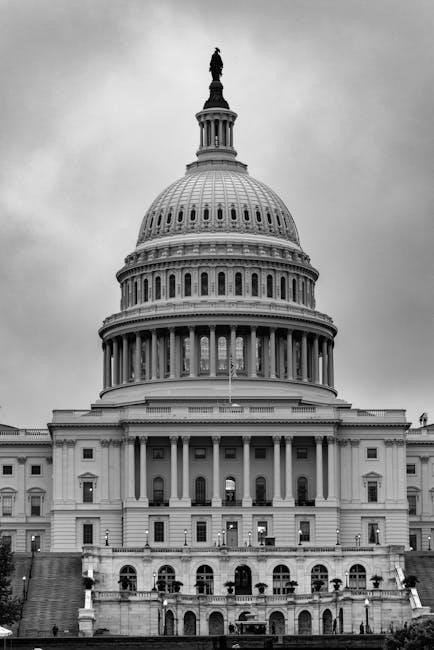
Congress, the legislative branch of the U․S․ government, holds the power to create laws․ It’s a bicameral legislature, meaning it’s composed of two chambers: the House of Representatives and the Senate․ This structure was a compromise during the Constitutional Convention, balancing representation based on population with equal state representation․
The primary function of Congress is lawmaking, but it also has significant oversight responsibilities, investigating issues and holding hearings․ Furthermore, Congress controls the federal budget, appropriating funds for various government programs and agencies․ It declares war, confirms presidential appointments, and can even impeach and remove federal officials․
Understanding the interplay between these powers is crucial to grasping how laws are made and how the government operates․ The structure and functions of Congress are central to the American system of checks and balances, preventing any single branch from becoming too powerful․
The House of Representatives
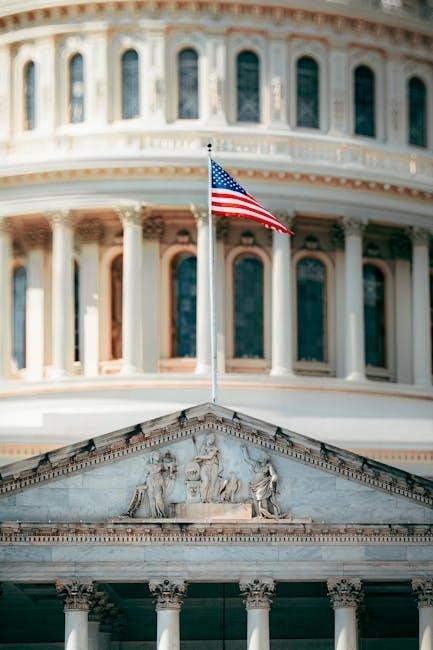
The House of Representatives, one half of Congress, is designed to represent the population directly․ Representation is based on each state’s population, meaning states with larger populations have more representatives․ Currently, there are 435 voting members, apportioned among the states based on the decennial census․
House members serve two-year terms, making them directly accountable to their constituents․ This frequent election cycle encourages responsiveness to public opinion․ The House has exclusive powers, such as initiating all revenue bills and impeaching federal officials․ The Speaker of the House, elected by the majority party, wields significant power over the legislative agenda․
Committees play a vital role in the House, reviewing bills and conducting investigations․ Understanding the structure and functions of the House is essential for comprehending the legislative process and how citizen voices are represented․
The Senate
The Senate, alongside the House of Representatives, forms the legislative branch of the U․S․ federal government․ Unlike the House, each state receives equal representation in the Senate, with two senators regardless of population size․ This ensures that smaller states have a voice in federal legislation․ Currently, there are 100 senators․
Senators serve six-year terms, providing more stability than the House․ Elections are staggered, with approximately one-third of the Senate up for reelection every two years․ The Senate possesses unique powers, including confirming presidential appointments (like judges and cabinet members) and ratifying treaties․
The Vice President serves as the President of the Senate, casting a tie-breaking vote when necessary․ Like the House, the Senate operates through committees to efficiently manage legislation․ Understanding the Senate’s role is crucial for grasping the checks and balances within the U․S․ government․
The Executive Branch: The Presidency
The Executive Branch, headed by the President, is responsible for enforcing the laws of the United States․ The President serves as both the head of state and head of government, wielding significant power and influence․ This branch is designed for decisive action and leadership on both domestic and foreign policy fronts․
The President is elected every four years through the Electoral College, a system designed to balance the power of populous and less populous states․ Beyond law enforcement, the President commands the armed forces, negotiates treaties, and appoints federal officials․
The Presidency embodies the principle of a single executive, ensuring unified national leadership․ Understanding the scope of presidential powers and responsibilities is fundamental to comprehending the functioning of the U․S․ government․
Presidential Powers and Responsibilities
The President’s powers are extensive, encompassing roles as Commander-in-Chief of the armed forces, allowing for strategic military decisions, and as Chief Diplomat, negotiating treaties with foreign nations․ A crucial power is the ability to veto legislation passed by Congress, though this can be overridden by a two-thirds vote in both houses․
Furthermore, the President appoints federal judges, including Supreme Court justices, shaping the judicial landscape for decades․ The power to grant pardons and reprieves offers clemency for federal crimes․ The President also delivers the State of the Union address, outlining legislative priorities and national goals․
These powers are balanced by significant responsibilities, including faithfully executing laws and ensuring the nation’s security, demanding careful consideration and informed decision-making․
The Role of the Vice President
The Vice President holds a unique position within the Executive Branch, constitutionally tasked with succeeding the President in case of death, resignation, or inability to discharge the powers and duties of the office․ Beyond this crucial responsibility, the Vice President serves as President of the Senate, casting a tie-breaking vote when necessary․
Historically, the role’s influence has varied, but modern Vice Presidents often play a significant advisory role to the President, participating in key policy discussions and undertaking important diplomatic missions․ They frequently serve as a liaison between the Executive Branch and Congress, fostering communication and collaboration․
The Vice President’s office is vital for continuity of government and provides valuable support to the President in navigating the complexities of national leadership․
The Judicial Branch: The Supreme Court
The Supreme Court stands as the pinnacle of the federal judiciary, interpreting the Constitution and federal laws․ Composed of nine justices – a Chief Justice and eight Associate Justices – appointed for life by the President and confirmed by the Senate, the Court’s decisions are final and binding on all lower courts․
A cornerstone of its power is judicial review, established in Marbury v․ Madison, allowing the Court to declare laws or executive actions unconstitutional․ This power ensures the checks and balances vital to American democracy․
The Court’s influence extends to resolving disputes between states, interpreting treaties, and safeguarding individual rights․ Its rulings shape American society and legal precedent, impacting everything from civil liberties to commerce․
Judicial Review
Judicial review, a defining characteristic of the U․S․ legal system, empowers the Supreme Court to examine laws and executive actions for constitutionality․ This principle, though not explicitly stated in the Constitution, was established in the landmark 1803 case Marbury v․ Madison, solidifying the Court’s role as the ultimate interpreter of the nation’s foundational document․
When a law or action is challenged, the Court assesses its alignment with the Constitution․ If deemed unconstitutional, the law is invalidated, impacting its enforceability․ This power isn’t absolute; the Court typically avoids addressing constitutional questions unless directly presented by a case or controversy․
Judicial review ensures the legislative and executive branches operate within constitutional boundaries, safeguarding individual liberties and maintaining the balance of power central to American democracy․ It’s a crucial component of the checks and balances system․
The Federal Court System
The federal court system is structured as a three-tiered hierarchy: district courts, courts of appeals, and the Supreme Court․ District courts serve as the trial courts, handling most federal cases initially․ Appeals from these courts are directed to the circuit courts of appeals, which review legal procedures and interpretations․
At the apex sits the Supreme Court, the final arbiter of federal law․ Its decisions establish precedents binding on all lower courts․ Specialized courts, like bankruptcy and tax courts, address specific legal areas․ Federal judges are appointed by the President and confirmed by the Senate, serving lifetime terms to ensure judicial independence․
This system ensures a consistent application of federal law across the nation, resolving disputes and upholding constitutional principles․ Understanding its structure is vital for comprehending the legal landscape of the United States․
Civic Engagement and Participation
Active participation in our democracy—through voting, engaging with political parties, and utilizing media—is crucial for a responsive and representative government․
Voting and Elections
Voting stands as a cornerstone of American democracy, enabling citizens to select their representatives and shape public policy․ This process, detailed within our textbook, encompasses various election types – from local races to presidential contests – each governed by specific rules and regulations․ Understanding voter registration requirements, early voting options, and absentee ballot procedures is paramount for full participation․
The electoral process isn’t simply about casting a ballot; it involves campaigns, debates, and the influence of political parties and interest groups․ We explore the historical evolution of suffrage, acknowledging past limitations and ongoing efforts to ensure equitable access to the polls for all citizens․ Furthermore, the textbook examines the role of campaign finance, the impact of media coverage, and the challenges of maintaining election integrity in the digital age․
Analyzing election results and understanding voting patterns provides valuable insights into the preferences and priorities of the American electorate, ultimately shaping the future direction of our government․
Political Parties and Interest Groups
Political parties, such as the Democrats and Republicans, are fundamental to the American political landscape, serving as organizing forces for like-minded individuals and competing for control of government․ Our textbook delves into their historical development, ideological platforms, and organizational structures, examining how they influence policy-making and electoral outcomes․
Beyond parties, interest groups – representing diverse sectors like business, labor, and advocacy organizations – play a crucial role in shaping public debate and lobbying policymakers․ We analyze their strategies, including grassroots mobilization, campaign contributions, and legal advocacy, assessing their impact on the legislative process․
The textbook explores the complex relationship between parties and groups, highlighting both cooperation and conflict․ Understanding how these entities navigate the political system is essential for comprehending the dynamics of American democracy and the representation of various interests within government․
The Role of Media in a Democracy
A free and independent media is vital for a functioning democracy, acting as a watchdog over government and informing the public․ This textbook examines the historical evolution of the media landscape in the United States, from traditional newspapers and broadcast television to the rise of digital platforms and social media․
We analyze the various functions of the media, including news reporting, investigative journalism, and opinion commentary, assessing their impact on public opinion and political discourse․ The textbook also explores the challenges facing the media today, such as declining trust, the spread of misinformation, and the concentration of ownership․
Furthermore, we investigate the influence of media bias, the role of social media in political campaigns, and the legal protections afforded to the press under the First Amendment, emphasizing its crucial role in a democratic society․

Current Issues in US Government
Current debates surrounding federalism, civil rights, and the future trajectory of American democracy are thoroughly examined, providing context for informed civic engagement․
Federalism and States’ Rights
Federalism, the division of power between a national government and state governments, remains a central tension in American politics․ This textbook delves into the historical evolution of this balance, from the early debates between Federalists and Anti-Federalists to modern-day conflicts over issues like healthcare, education, and environmental regulation․
The concept of states’ rights – the idea that states possess certain powers independent of the federal government – is intricately linked to federalism․ We explore landmark Supreme Court cases, such as McCulloch v․ Maryland and Gonzales v․ Raich, which have shaped the understanding of federal power and its limitations․
Contemporary challenges, including debates over immigration policy, marijuana legalization, and responses to national emergencies, illustrate the ongoing struggle to define the appropriate scope of federal and state authority․ The textbook analyzes how differing interpretations of the Tenth Amendment fuel these disputes, impacting policy outcomes and citizen experiences across the nation․
Civil Rights and Liberties Today
This section examines the ongoing struggle for civil rights and liberties in the 21st century, building upon the foundations laid by the Civil Rights Movement․ We analyze contemporary challenges to equal protection under the law, including issues of racial profiling, police brutality, and systemic discrimination in areas like housing, employment, and the criminal justice system․
The textbook explores evolving interpretations of the First Amendment, particularly concerning freedom of speech, religious expression, and the press, in the digital age․ Debates surrounding online censorship, hate speech, and the balance between security and privacy are thoroughly investigated․
Furthermore, we address emerging civil liberties concerns related to LGBTQ+ rights, gender equality, and disability rights, highlighting recent legal battles and social movements․ The enduring relevance of the Bill of Rights in safeguarding individual freedoms against government overreach is a central theme throughout this chapter․
The Future of American Democracy
This concluding section contemplates the challenges and opportunities facing American democracy in the years ahead․ We examine the impact of increasing political polarization, declining civic engagement, and the spread of misinformation on the health of our institutions․
The textbook analyzes potential reforms to address these issues, including campaign finance reform, voting rights expansion, and efforts to promote media literacy․ Discussions explore the role of technology in shaping political discourse and the potential for both positive and negative consequences․
Furthermore, we consider the evolving demographics of the United States and their implications for the future of representation and governance․ The importance of fostering a more inclusive and participatory democracy, where all voices are heard and valued, is emphasized as crucial for ensuring the long-term vitality of the American experiment․